
“And let that be a lesson to you all. Nobody beats Vitas Gerulaitis 17 times in a row.”
That was what the tennis player said after breaking his 16-time losing streak.
Sometimes, it almost seems like the best way to get through life is to lie to ourselves. But then again, it’s not lying if it’s true, right? We’re just choosing to reframe what’s good and bad. Seeing the silver lining, if you will.
So join me as we take a look at how we can better lie to ourselves, and turn our negatives into positives.
The problem with our minds
They say that nothing’s inherently good or bad, that thinking makes it so. That we tend to make mountains out of molehills.
They also say that our minds can’t distinguish between reality and imagination.
The thing with our thoughts is that they can work against us as much as they could work for us. Which is why it’s important to get our minds on our side.
Here are a few quick examples of how we’re mentally putting ourselves at a disadvantage.
Catastrophising: You fear quitting a shitty job because you might not find a job ever again.
All or nothing: You’ve already screwed up our morning routine, so you might as well do what you wanted. Bring on the beer and the doughnuts!
Fortune-telling: You just know that things will turn out badly for you. There’s no other way. It’s a proven fact that you fail at anything you try.
And this is only the start. Our self-sabotage knows no bounds. Which is why it’s important to build awareness.

Observing our thoughts
The first step towards better thinking is knowing what we’re thinking in the first place. Otherwise we’ll just end up going through life on autopilot.
And the main goal here is to observe our thoughts, not control them. Because anyone who’s ever meditated for more than three minutes will know what a monkey your mind can be.
But how do we learn to observe our thoughts? Here are a few suggestions.
a. Meditation: You knew this was coming. There’s no better way to learn the inner workings of your mind than by simply observing it.
b. Journalling: Turning your swirling thoughts into words is a good way of fleshing them out. Also, it’s easier to reflect on them by distancing yourself a little.
c. Chores: Focusing on your daily tasks is a great way to practise being with your mind. Take the time to be present when you’re doing the dishes, for example. See if you can observe your thoughts better.
With practice, you’ll start to notice thinking patterns that may or may not be serving you well.
For instance, do you automatically dread what’s to come every time your boss calls you into the office? Or do you grow impatient every time you join a long queue?
It’s when you gain these insights that you can begin interrupting your way of thinking. This is where you can start lying to yourself.
Reframing your blahs to yas
Jocko Willink’s Good video sums this up pretty well.
“When things are going bad, there’s going to be some good that’ll come from it.”
This is a good reminder because I know exactly how it feels to choose negative thoughts.
Yes, it’s not as if you can flick a switch, but trying is better than defaulting to negativity. Here are some methods that have worked well for me.
i. Accept the guilt
Many of us are quick to avoid guilt when we should harness the discomfort instead.
So whenever I feel guilt, I tell myself it’s my conscience showing me which habits I should change.
Feel bad for eating an entire pint of ice cream? That’s my conscience guiding me. Hate myself for hitting the snooze button? Conscience. Can’t stand the thought of having dawdled another day away? Ditto.
Pain is never fun. But just like how you learn to be careful around fire, pain is also a necessary evil for your personal growth.
So don’t be so quick to run to ‘self-love’ to try and cancel guilt out with spa appointments or a swig of whiskey.
Instead, let pain guide you into not making the same mistake twice.

ii. Divide and conquer
This is the best way to approach anything in life. Don’t choose to see big goals as insurmountable tasks. Instead, break them down into their tiniest components and tackle them one at a time.
My personal example would be looking at my novel as a collection of short stories. If I look at the task in its entirety, I’d probably be intimidated into submission.
Instead, when I see it as separate chapters, then the act of writing becomes more manageable. In fact, I started much smaller. It was 250-word blocks for me at first.
The sooner you eat your elephant one bite at a time, the quicker. you can get to solving your problems.
iii. How is this the best thing that’s happened to me?
Chuck Palahniuk once said his dad wouldn’t stop pestering him for a Hollywood star’s phone number. Then his father died. He said one of the ways he dealt with it was by looking for the silver lining, however small. And in this case, he felt thankful that his father wouldn’t ask him for the phone number anymore.
Sometimes, we have to dig deep to find a positive, but there’s always one to be found.
Look at the worst thing that’s ever happened to your life. Then ask yourself how it was the best thing that’s ever happened to you.
Training yourself to think this way gives back a sense of empowerment. Sure, you can’t escape fate, but you’d at least start with something under your control. And that’s your ability to choose.
So it’s not your fault that COVID happened just as you started your business. But maybe that was the best thing that’s happened because you were forced to look into e-commerce.
Or maybe you were bullied in high school and were triggered into learning martial arts, which resulted in a healthy life.
iv. What can I do right now?
I understand that some days you just can’t get off your ass to do something. On those days, it’s important to contain yourself to the present moment.
Don’t think too far ahead, don’t look at your goals, don’t even bother with everything else outside your circle of influence.
Just ask yourself what you can do right now to make things 1% better.
That could be tidying your desk, clearing your laundry basket, or even brushing your teeth. Whatever it is, err on the side of action, because that’s what our scumbag brain likes. Momentum.
I personally have a set of brainless activities to do when I’m not feeling my best. These tasks also help me feel better about myself once completed.
Examples would be cleaning the house, pruning my belongings, doodling, or stretching.
The beauty of thinking in the now is that it stops you from wallowing too much about the future or the past.
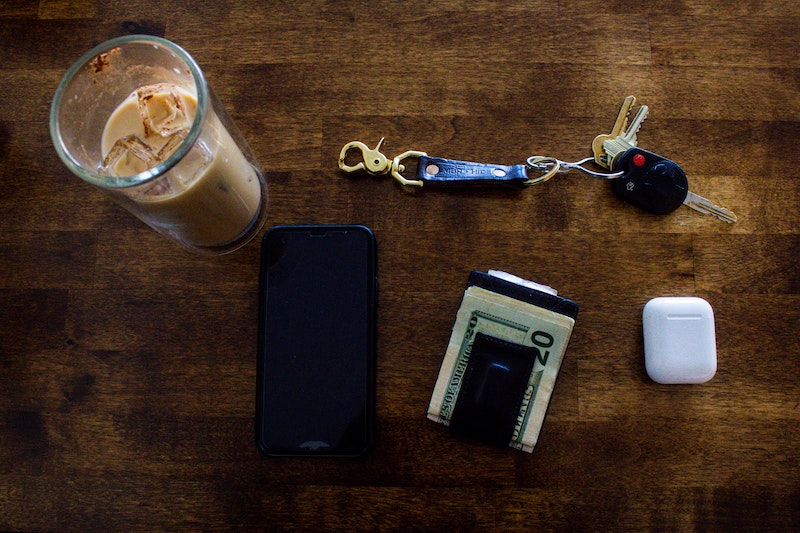
When I used to have a job I hated, I always had my car keys on my desk. Whenever I felt anxious, I’d look at the keys and tell myself that I could just walk out and drive home. That meant I didn’t need to stay in a situation I didn’t like.
So if you find yourself feeling flustered or anxious, stop. Take a breather and ask yourself if there’s anything you can do to make things 1% better.
Sometimes, just having options helps.
v. Challenge your thoughts
Let’s talk about meditation once more, because I need to remind you that your thoughts aren’t you.
Which is why when your mind tells you you can’t do something, always challenge what it deems as ‘truth’.
Maybe this is why I enjoy exercising, because I get to challenge that voice all the time, since each set goes as thus:
- Work out to the point of fatigue
- Mind jumps in, telling me I should stop
- The real me recognises that as my coward voice
- Push out an extra two to three reps to spite said voice
- Learn my new limits, and how much of a liar my mind is
Negative thoughts have always been a problem for me. I suffer their presence even when planning to get the groceries.
My mind will tell me that the store will be packed. That there won’t be parking. That the queues would be too long. That the groceries I want won’t be in stock. I’d exhaust myself even before I’d step out the door.
But the actual experience always turns out to be much milder than my mind would have me think. That’s why it’s important to always challenge your initial thoughts.
Figure out your reality by living it, and not through the hearsay of your mind.
Happiness is not the end goal
Here we are at the end of this post, and I hope I’ve not wasted your time when I say this: happiness isn’t the point.
Because happiness, like a beach body, should be a result of the way you live, not a transaction that happens only once in life.
It’s not like buying a PS5 off the shelf. It’s more like a lease you have to continually service, one that could get out of hand if you stopped paying.
So the next time you reframe your negative thoughts, don’t tell yourself you’re doing that to be happy. Instead, do it for a better reason: to empower yourself.
Don’t look at this newsletter as random e-mails you get in your inbox. Instead, reframe it to ‘exclusive content you won’t find anywhere else on the blog’. Also, if you’re a WordPress user, you’ll receive a guide on how to grow your blog. Just click on the button and be part of the amazing community.


I’d love to hear your thoughts!