
I was a stringer for the national newspapers once. My job was to pick up any assignments that the full-time team couldn’t handle, which amounted anywhere from one story every fortnight to two articles a week. That meant that my income was unstable at best, but what made up for it was the lack of daily commute or morning meetings, and all this before the digital nomad movement.
After spending most of my life in hairdressing (ten-hour workdays, six days a week, regardless of holidays) and auditing (in the office before the sun rose and out after the sun set), having my own time at the expense of a higher paycheque seemed like a great deal.
So that was the reason why, after just having landed in Langkawi to celebrate a friend’s bachelor party, I received a call from my editor for a job.
Now, I could’ve rejected the offer, but that trip I was on cost a pretty penny, and I was at a point in my career where I didn’t have much expendable income to begin with, so I said yes. Besides, my editor assured me it’d be an easy job.
“I just need you to interview a handful of people regarding the lies their parents used to tell them about Santa,” she said. “Deadline’s in three days.”
I wouldn’t even have left Langkawi in three days.
But being broke was a great motivator, so told her I’d get it done, and proceeded to spend the following mornings hungover on my phone. I sent in my story three days later, having completed the entire assignment on my Blackberry Bold.
This important experience taught me that one, the equipment you use doesn’t matter, and two, the ‘eat an elephant one bite at a time’ metaphor really does work for writing. And that, ladies and gentlemen, brings me to micro-writing.
What is micro-writing?
This is the act of writing in short spurts whenever you get any brief window of downtime. It works best when you’re on the go, though it’s also applicable to parents who‘re busy taking care of the kids. Procrastinators who ‘can’t seem to find the time in the day to write’ can benefit from this too.
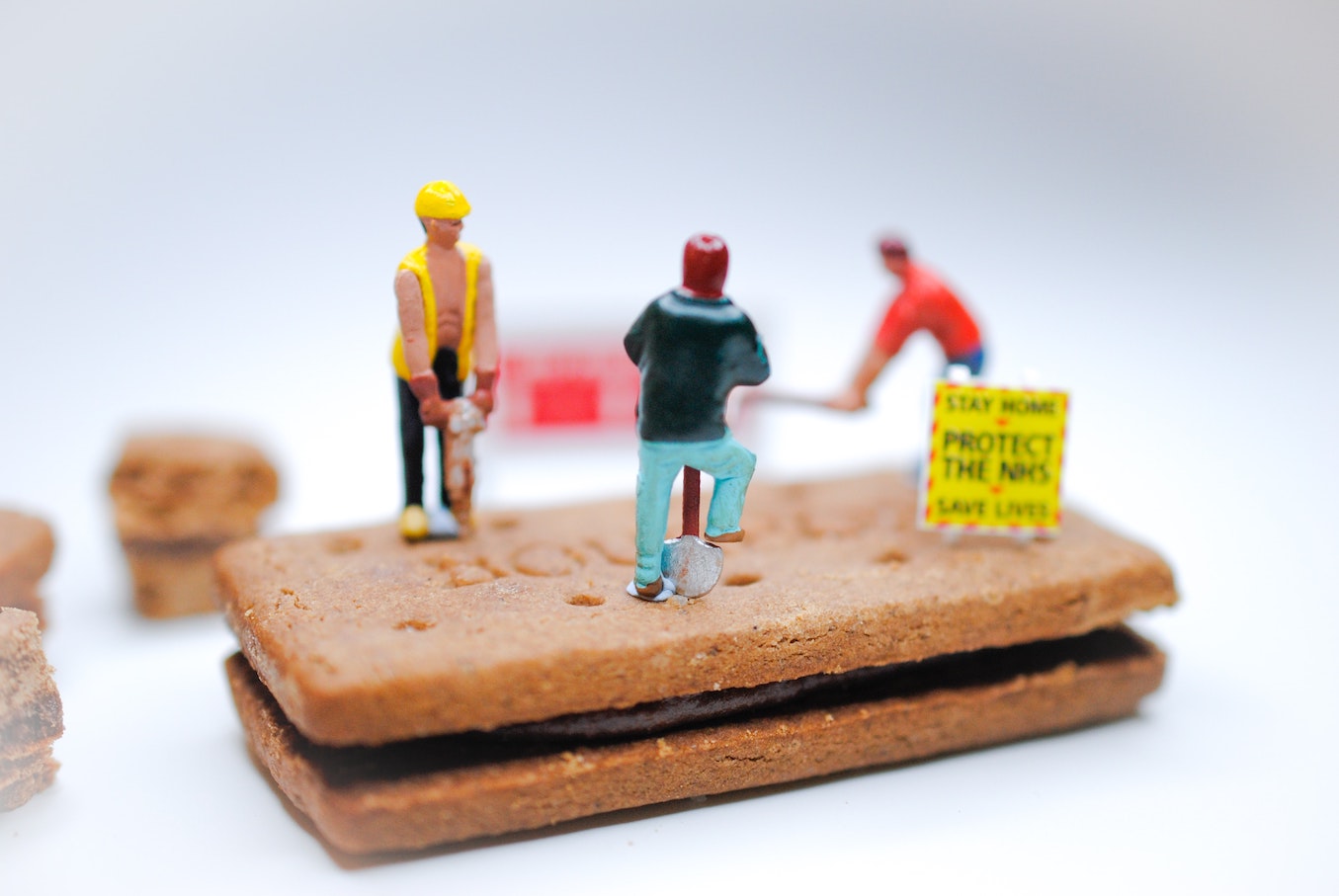
Basically, it’s the age-old metaphor of building a wall, brick by brick. The catch is, you don’t go into every session looking to build a wall. All you need to concern yourself with is laying those few bricks for the day.
You know what the cool part about this is? It’s that you can micro-write your way to finishing projects both small and large. I’ve used this for thousand-word articles as well as for entire novels.
The trick here isn’t to exclusively write in short spurts. It’s to be happy with writing for minutes at a time, and if you feel like you can carry on after your few minutes are up, you can then feel free to write for however long you want.
So if you’re looking to tackle your writing excuses, then micro-writing could very well be the thing you’re looking for.
Hook yourself up
Now you’re ready to tackle your writing projects one sentence at a time. What will you need? First things first, a medium. I know I said the equipment doesn’t matter, but for long-term success, you’ll have to pick something you enjoy using, especially ones that are quickly deployable during these five-minute sprints.
If you prefer a laptop, then go ahead and lug it around. If it’s a fountain pen and a notebook, be my guest. Heck, you can even use your phone and a Bluetooth keyboard if that suits your fancy. Don’t forget the voice recorder either.
Next, you’ll have to determine the empty pockets of time in your day when you can micro-write. I’ve personally written in transit during my travel assignments, in a bar at said bachelor party, and at the salon while waiting for my girlfriend to get her hair done.
Finally, you’ll need a way to stay on track. Leave notes for yourself the way programmers leave comments in their code. I like to put mine in square brackets, and it looks a little something like this: [Explain why notes are important after this].
So why are notes important? Because you don’t want to waste half of your five-minute spurt trying to figure out the next step. You are, after all, trying to remove your excuses for procrastinating. So be kind and leave little breadcrumbs so that future you will have an easier time finding their way.
Why does micro-writing work?
Because we all have the time to write. We all have idle moments in our day, and those seemingly imperceptible windows can total up to a pretty impressive number after a month.
And I’m pretty certain that in today’s day and age, almost everyone has time for a five-minute YouTube video. If you have time to watch a video, you have time to micro-write.
Speaking of videos, I have a Joe Rogan podcast I’ve been dying to check out. Be right back. [Continue sharing benefits of micro-writing once I’m done watching].
Where was I? Oh yeah, the other benefits. Wanna know something cool? Micro-writing works great in removing your typical writing excuses.
“I don’t have the time.” More like I’m just lazy and don’t want to eke out 5 out of the 1,440 minutes I have in a day to achieve my writing dreams.
“I need uninterrupted time to write or else I can’t think properly.” Nobody’s asking you to write your magnum opus. You just need to concern yourself with the next couple of sentences in your project. That’s it. [Also, you can use these square brackets as placeholders for your terrible sentences. Try it. It’s easier to write words when you’re not judging them as the final product].
“I have more important things to do.” It’s just a few minutes. You can procrastinate later. In fact, you know what? Maybe you should start right now. Go on. Stop reading this article. Write that couple of sentences for that project you’ve been meaning to complete. See how you feel after.

Add your own flavour
But that isn’t all micro-writing has to offer. It also includes the benefit of keeping those writing muscles stimulated.
Want to flesh things out using only dialogue? You’re free to do that. Want to push the plot forward with three-worded sentences? Have at it. When you work at things one snippet at a time, you’ll find a clarity that’s often sacrificed when you approach your project from a bird’s eye view.
Trying to connect an intro to your final paragraph can feel daunting, but just taking five minutes to experiment with one paragraph can free you from all those expectations. Think of it like building a Lego set. Yes, it’d be cool to complete that Star Wars Death Star and put it on display, but first, you’ll need to have the right bricks. And these paragraphs are your equivalent of those bricks.
It’s an art
Remember, writing is a subjective craft. There’s no cookie-cutter method that promises a lifetime of decent writing output. We’re all different, and what works for someone might not work for others.
Also, remember that micro-writing is best used to get started. Procrastinating becomes less appealing when you tell yourself that all you’re going to do is write for five minutes.
So if you think you’ll be able to continue writing after your five minutes are up, by all means, please do. Yes, yes. I’m repeating myself. But I just want to make sure you don’t lose out on all that momentum you’ll inevitably build during one of these little spurts.
Having said that, just know that micro-writing is just another tool to add to your arsenal. In the end, it’s all about how you mix and match all the different processes to create your own personal workflow.
I can safely say though, that when it comes to writing, it’s almost always better to start with a heap of words than with a blank page, even if you have to rewrite the entire thing. That’s what micro-writing is for. So that you can err on the side of writing bad words than not writing at all.
Because in the end, we’ll all cross the finish line the same way every other writer does, and that’s by writing one word at a time.


I’d love to hear your thoughts!