
After a few years of 16:8 fasting, I’ve decided to transition into one meal a day (OMAD). I say 16:8, but I was fasting 18–20 hours a day on average, which is why OMAD was just a small step up.
And surprisingly enough, it’s much easier than the articles online make it out to be. So after a month of OMAD to date, I thought I’d share my experience to those interested in fasting.
My version of OMAD
There are many ways to approach this diet, the most common being eating all your calories within an hour.
But my goal isn’t to lose weight, so I take as much time as I need to eat until I’m satisfied. What I do is I eat a starter, a main meal, and a dessert, which takes about two hours. I typically feast during dinnertime.
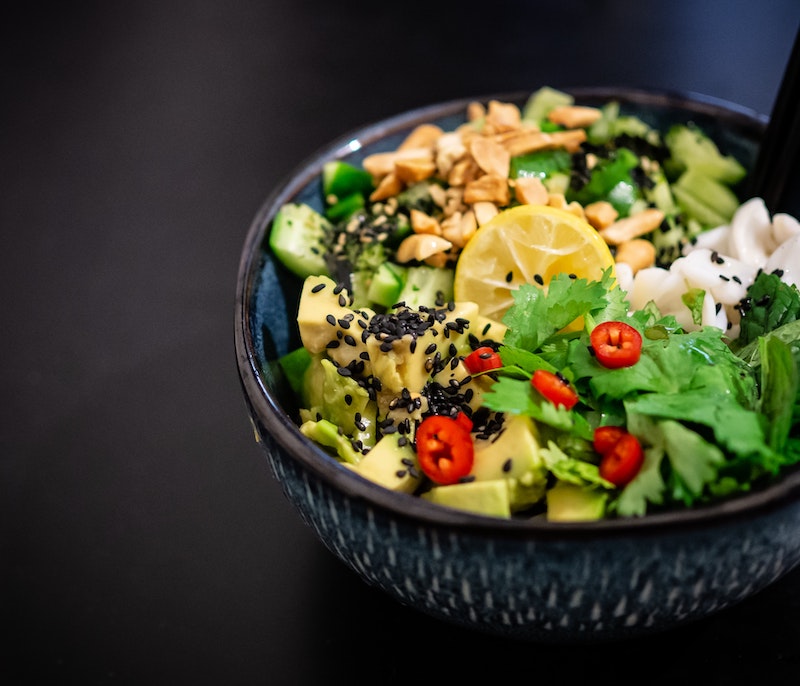
Every day, I have a salad to start things off, and I finish my feasting window with oats and fruits. These are non-negotiable as they cover both my micro and macro needs. I also add avocado, nuts, and yogurt to pad my stomach on the extra-hungry days.
The main course is where the menu varies, which depends on what I cook for the day. Sometimes it’s braised chicken, other times it’s sweet and sour pork.
This is the version of OMAD that works best for me. Yours may vary.
Effects on my body
I’ve noticed quite a few changes when I first made the leap from a standard diet to 16:8. Ever since I adopted OMAD, there have been additional effects that I’ve found pretty interesting.
a. My weight has remained the same. Which is a good thing, since I don’t want to lose weight. I’m surprised that I’m able to stay at my usual 63 kilos, as it’s hard to eat all your calories in one sitting. While many embark on OMAD to lose weight, I’ve found it great for maintenance as well.
b. I need less sleep. Maybe it’s because my body doesn’t waste as much energy digesting food, but I’ve found that I tire much later in the day and feel fresher upon waking up. It’s a marked improvement over my 16:8 routine, and not just from my pre-fasting days.
c. I’m less bloated. I mean, this should be a no-brainer since I’m eating less. But I eat a lot of fibre and non-processed food, so gas was a common thing during my 16:8 days. That problem seems to have disappeared on OMAD, even though I’m basically eating the same meals.
d. I’m more at peace. Besides a general calmness, I seem to enter this zen state every day at six in the evening. I don’t know what it is about the 20-hour mark, but life’s problems tend to fade once I pass that zone.
e. I still choose healthy food. You’d think that this diet would invite cravings and binge eating. Instead, the only thing I crave is nutrients. I always prioritise the aforementioned salad, oats, and fruits. Then I eat whatever I’ve been craving without the guilt. If there is a craving.
f. I’m more forgiving. I can be pretty all-or-nothing sometimes. When I fall off the rails, I really crash and burn because I figure I might as well fail spectacularly. That’s not a good way to maintain good habits, as you can imagine. On OMAD though, I’m not fazed by a doughnut (or six). In fact, I savour the occasional junk. Guilt? More like guiltlicious!
g. I have more time. Not really a physical effect, but even though I still spend the same two hours a day eating, I feel like I have more time in my day when I eat in one sitting. Maybe this batching thing really works.

OMAD is not a miracle pill
Extreme diets seem alluring to people who want to lose weight. Because of that, they dabble with plans like OMAD and ditch it once they reach their goals. Then they return to their old weight and start the cycle all over again.
But change requires getting rid of the past you. You can’t forgo the doughnuts for a month and expect to maintain your new body forever. Similarly, you don’t lift weights for a month and expect to keep your muscles indefinitely.
OMAD, like every other pursuit in life, should be a lifestyle, not a temporary fix. This is the main reason why people fail with their diets. Because they treat it like a one-time certification.
The best diet is one that you can sustain. So make small changes and stick with them. That’ll benefit you much more than a drastic plan you try for a couple of weeks.
Lessons learned from OMAD
Besides the physical changes, I’ve also attained quite a few life lessons in general. Here are the ones that stood out.
i. Difficulty is subjective
Here’s a neat term for you: mithridatism. It’s the act of immunising yourself to poison by ingesting non-lethal amounts. It’s the same with difficult things. You do tasks that challenge you, and slowly increase the pace until the big tasks don’t matter.
So many people see OMAD as a crazy diet, but it’s something you can get used to. Do it for a while and it’ll feel no different from the three-meal days you’re familiar with.
This is a good lesson for me because I find authorship to be a hard life. But by eating my daily poison of writing, I could perhaps one day reach my prolific dreams of producing six novels a year.

ii. Do less to do more
This is especially true when you’re new to the habit. I’m learning to cook, but since I’m such an amateur, attempting two meals a day is a pretty big ask.
After adopting OMAD, though, I’ve only needed to focus on dinner. And that’s allowed me to really take my time with the recipes.
We often put too much on our plate (ha) and end up half-assing our tasks. Because of that weak follow-through, we start thinking we’re not good enough for our goals.
Crush your tasks by starting small, though, and you start to gain confidence in your pursuit. Sometimes, we need to go small so we can go big.
iii. Distraction is the enemy
Distracting ourselves is all we do these days, with everything from social media to Netflix available at our fingertips. Eating is no different.
It’s only after reducing my eating frequency that I realised how much I ate out of boredom instead of hunger. And that realisation has carried over into my other activities as well.
After all, how much do I really need to check Facebook? Especially since the last time I logged on was twenty minutes ago? And do I need to pick up my phone right now? Can’t I find something else to do?
It almost feels like distractions exist just to test us. It’s not enough to know what our life goals are. We also need to be mindful of all our actions that don’t contribute to our lives.
iv. Tackle the big problems first
There’s no reason to adopt specialised diets if you’re not going to drop your soda habit. You don’t need that energy necklace if you’re going to neglect your sleep. Similarly, you shouldn’t decide between Paleo or OMAD if you’re not going to feed yourself properly in the first place.
So many of us want to skip the basics in exchange for the next trend. This is why shams like fat-burning pills and vibration belts exist.
Oftentimes, the solutions to our problems are free. They just require us to wade through a bit of pain. Tackling our vices is a great place to start. Then it’s building healthy habits.
Very rarely do you need a crystal bracelet to detox your liver. You just need to cut down on that bottle of wine after dinner.
v. Junk in, junk out
We are what we put into our bodies, not just physically, but mentally as well.
During my month on OMAD, I’ve realised just how important it is to nourish my body with proper food instead of pizza or pasta. This is because the sugars hit me much harder when I’m in a fasted state.
I’ve also noticed a change in my headspace when I consume less information throughout the day. It’s all related, this mind-body thing.
We don’t control what happens to us, but we have 100% ownership over what we put into our bodies. And that’s a pretty empowering feeling. As long as we’re aware of it.
What’s next?
So that’s my experience with OMAD in a nutshell. For now, I see myself continuing the diet indefinitely. I might opt for two meals when I have jiu-jitsu classes, because I can’t maintain my caloric needs otherwise. But on the whole, I’m pretty happy with one meal.
Of course, it’s important to part with a disclaimer that this is my experience, and it shouldn’t be used as a guide of any kind. Consult your healthcare provider and whatnot.
Now if you’ll excuse me, I’m off to enjoy my zen hour of the day.
Regardless of how many times you eat a day, my e-mail frequency remains the same, and that’s twice a month. Join now to receive exclusive content you won’t find anywhere else on the blog. Plus, you’ll get a guide on how to grow your blog if you’re a new subscriber.


I’d love to hear your thoughts!